
From field action to the next action: how QareData works
QareData starts with an operational question: what will need to be understood, verified, or decided after the action?
The answer defines the useful traces to capture, the element to attach them to, and the people who will need access to them.
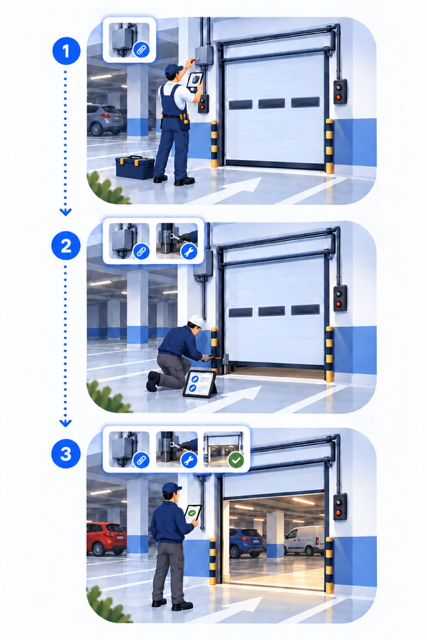
At the moment of action, the field worker captures these traces in their context. They progressively build operational knowledge attached to the element, ready to prepare the next action.
The business needs first determine what must be preserved
The first step is identifying the knowledge that must remain available after the action.
The reflection starts from field reality and four key questions:
What will need to be understood after the action?
What information will be required to ensure its continuity or make a decision?
To which element must this knowledge remain attached?
Who will need access to it, and at what moment?
The answers define the useful traces to be captured.
Only information strictly necessary for comprehension, continuity, and action is intended to be preserved.
Five steps to build and circulate knowledge
The element becomes the reference point
The element is what will be tracked over time.
It can be tangible or intangible, fixed or mobile: equipment, a location, housing, an installation, a worksite, or a recurring service.
Knowledge produced over successive actions will remain attached to this element.

The field worker accesses the element at the moment of action
Whenever a visit, intervention, inspection, or construction step occurs, the worker accesses the relevant element directly.
This access can be done via a QR code or from a QareData interface.
The QR code serves as an access method. It is neither the end goal of QareData nor the sole way to use the solution.

The useful trace is captured in its context
The field worker documents the action as it takes place.
Depending on the use case, the trace may include:
Only information defined as useful is requested.

Knowledge of the element is enriched
The trace remains attached to the relevant element.
It joins previously preserved traces and progressively enriches its knowledge base.
It becomes easy to find what was done, when, where, and by whom, without hunting for an isolated report or reconstructing history from witnesses.

Knowledge circulates and prepares the next action
Authorized stakeholders access the information they need.
According to established rules, knowledge can be shared, transmitted, or used to trigger an alert or notification.
It then facilitates monitoring a service, coordinating works, conducting an inspection, informing a decision, or preparing a new intervention.
This new action can in turn generate a useful trace, and the cycle continues.

The same principle for different elements
Equipment
Maintenance or inspection
Date, operator, operation performed, photograph, document
Retrieve intervention history and understand equipment condition
Housing or worksite
A visit or construction phase
Progress, photographs, observation, status, document
Monitor works and coordinate contractors until handover
Recurring service
On-site visit
Start and end times, location if required, actions performed, photographs
Monitor teams, verify execution, and share information with the client
In every situation, the workflow remains identical.
The business need defines what must be preserved. The action can produce a useful trace. Once captured, this trace enriches the element's knowledge. This knowledge becomes available for what comes next.
See how this cycle applies to your field reality
QareData adapts to the element tracked, the actions performed, the necessary traces, and the stakeholders involved.
A demonstration allows you to start directly from your situation and map the complete knowledge cycle.